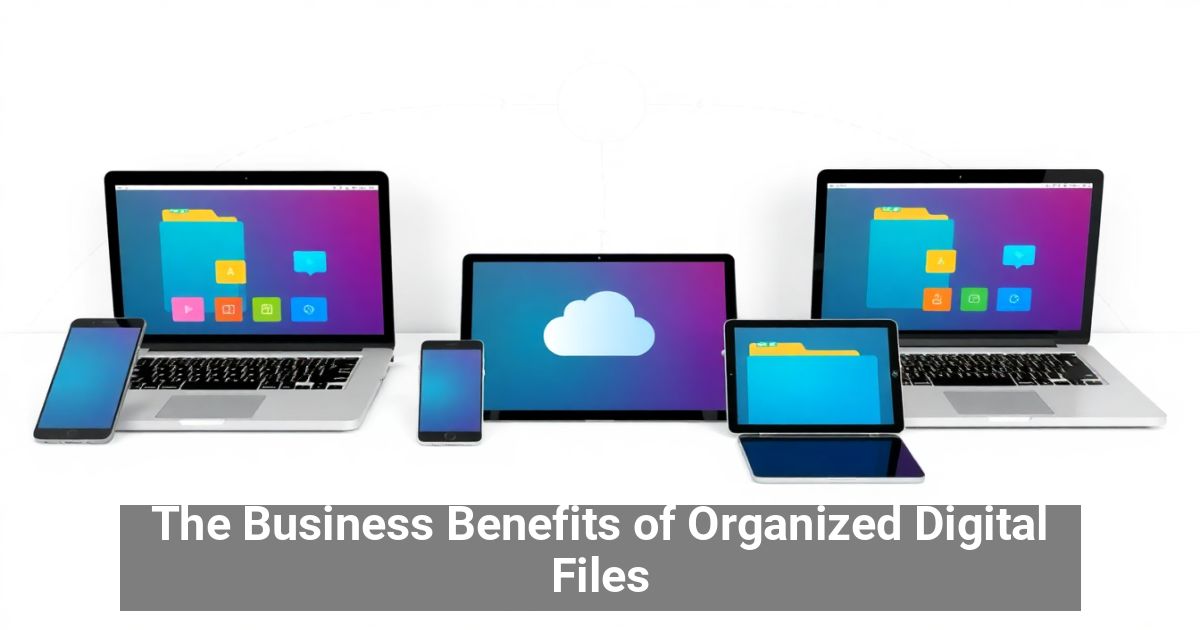
 How much time does your team spend hunting for elusive documents? Digital clutter frequently becomes an overlooked productivity killer. Learn how the modern business prioritizes digital file organization to stay ahead of the competition.
What Is Digital File Management?
Industries across the board are going digital, and with this transformation comes a mountain of data, from PDFs and spreadsheets to contracts and multimedia files. Critical information can get lost in the shuffle without a clear system in place.
That’s where digital file management comes in. This systematic process involves organizing, storing, tracking, and securing electronic documents and media.
Why Modern Digital File Organization for Businesses Matters
When done correctly, this practice brings the following worthwhile advantages.
Radically Faster Search and Retrieval
Have you ever wasted hours combing through cluttered drives or email chains for a single file? By implementing a structured folder hierarchy or using metadata tagging, documents become easily searchable. Your team can dedicate more time to productive work instead of scavenger hunts.
Collaboration Made Easy
Most companies today operate with teams spread across different locations. With cloud-based solutions, multiple people can work on the same project without confusion, overlapping edits, or messy “final_v2_final.pdf” email chains.
A centralized repository acts as the single source of truth. It tracks differential changes and creates rollback points, so users can easily restore previous iterations of a file when needed.
Strengthened Data Security
Improving productivity with file management is just the tip of the iceberg. Cyber threats continue to evolve as criminals leverage sophisticated tools like AI and machine learning. Why risk your sensitive information with an obsolete setup?
Efficient document management systems protect your files in various ways. Data at rest and in transit stays secure using cryptographic protocols, while immutable audit trails log every action taken on a document. Administrators can even enforce Role-Based Access Controls (RBAC) to define exactly who can view, edit, or download specific files.
Effortless Regulatory Compliance
How can you meet GDPR, HIPAA, and other industry standards with your data haphazardly scattered across countless systems? One of the most important digital file organization best practices is setting up automated retention schedules to govern the lifecycle of documents.
The software will automatically flag or permanently delete records once their legal retention period expires, ensuring strict adherence to compliance mandates without manual audits.
Automated Disaster Recovery
Your company’s data remains safe even if physical hardware becomes lost, stolen, or destroyed in a natural disaster. Digital management systems leverage cloud computing to distribute data across geographically redundant servers.
Continuous, automated synchronization ensures that business operations can continue with minimal Recovery Time Objective (RTO) in the event of an outage.
Transforming Operations Through Smart Digital File Solutions
If you’re ready to improve your digital file organization, conduct an audit of your current systems first. Next, look for a centralized platform that integrates seamlessly with your workflows.
Establish a consistent folder structure, apply clear naming conventions with dates, and enforce role-based access controls. We also recommend utilizing version control and automated backups to ensure security and compliance.