
I remember when fixing technology meant blowing into a Nintendo cartridge.
Game wouldn’t load?
Blow on it.
Still didn’t work?
Blow harder.
If that failed, you smacked the console and tried again.
That was our version of IT support.
And honestly… we thought we were pretty good at technology.
But your kid?
They’ve never had to fix anything that way.
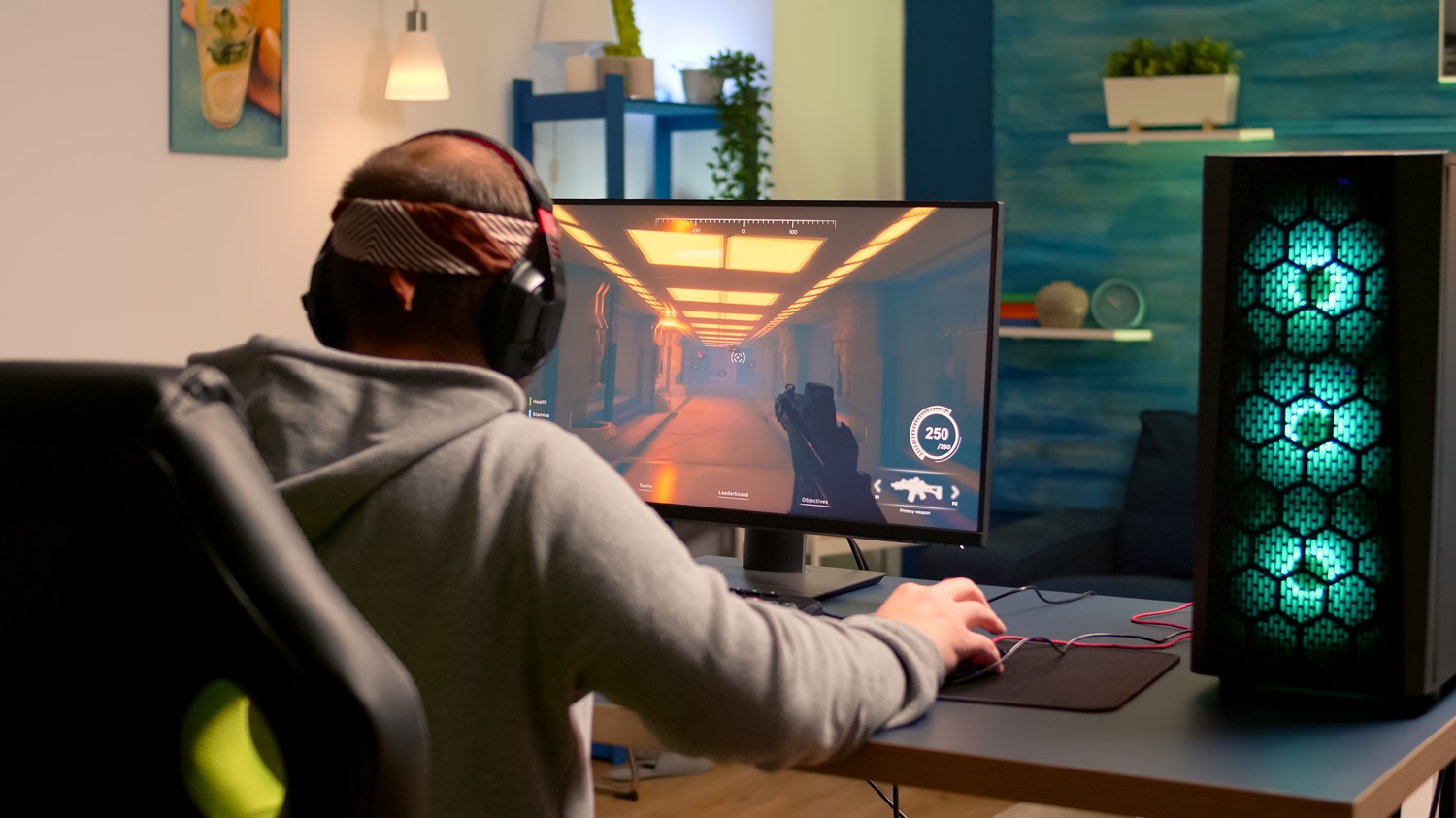
Their gaming setup probably has:
- A lightning-fast solid-state drive
- 32 gigs of RAM
- A graphics card that could render a movie scene
- Mesh Wi-Fi that eliminates dead zones
- Multi-factor authentication on every account
It’s optimized.
Tuned.
Maintained.
Now think about your office.
There’s a workstation from 2019 that takes forever to start.
A printer that jams every Tuesday like clockwork.
Shared folders named things like:
“New Final FINAL Really Final.”
Software that doesn’t talk to each other.
Wi-Fi that mysteriously dies in the conference room.
And a laptop that’s been showing “Restart to update” for three weeks.
Gamers optimize.
Businesses tolerate.
And that gap costs more than most firms realize.
Why Gamers Actually Win This Comparison
The funny part is that this isn’t about money.
A gaming computer often costs about the same as a business workstation.
Business internet plans are usually faster than residential ones.
And the tools that secure and monitor business networks are widely available.
The difference isn’t budget.
It’s attention.
Gamers update everything immediately.
Operating system patches.
Drivers.
Firmware.
Game updates.
They install updates the moment they appear.
Why?
Because outdated software causes lag.
And lag means losing.
Meanwhile, many offices postpone updates for weeks.
But those updates usually exist for one reason:
To fix a security problem that was already discovered.
The patch is available.
It just hasn’t been installed yet.
Backups: Gamers Understand This Lesson
Gamers also protect their data.
Lose a 200-hour game save once and you’ll never forget it.
From that point on, backups happen automatically.
Yet many small businesses still operate without a reliable backup plan.
When a gamer loses data, they lose progress in a fictional world.
When an advisory firm loses data, it could mean:
- Client documents
- Financial records
- Portfolio information
And possibly the ability to operate normally.
For RIAs, protecting client data isn’t just good practice.
It’s part of protecting client trust.
And regulators expect firms to have safeguards in place for exactly that reason.
Gamers Monitor Performance. Businesses Wait for Complaints.
Another difference?
Gamers watch their systems constantly.
They track:
CPU temperature
Network latency
Frame rate
Disk usage
If performance drops even slightly, they investigate immediately.
Most businesses discover problems a different way.
Someone walks into the hallway and says:
“Hey… the internet feels slow today.”
That’s not monitoring.
That’s waiting for something to break.
Your kid would never run their gaming setup that way.
And their computer isn’t responsible for anyone’s livelihood.
How Offices End Up This Way
The truth is, nobody designs a messy technology environment on purpose.
It happens gradually.
A CRM gets added.
Then accounting software.
Then file sharing.
Then payroll.
Then security tools layered on top.
Each decision made sense at the time.
But over time, technology stops being designed and starts being accumulated.
And accumulation creates friction.
Gaming rigs are built intentionally for performance.
Most office systems are built gradually for convenience.
One is a strategy.
The other is an accident.
And accidental systems eventually become expensive systems.
The Cost Nobody Tracks
Technology problems rarely show up as one big disaster.
Instead, they show up in tiny daily interruptions.
Waiting for a slow login.
Searching for a document someone saved in the wrong folder.
Entering the same data into two systems that don’t sync.
Restarting the same computer every week.
Each one feels small.
But interruptions have a hidden cost.
Every time work gets disrupted, it takes time to fully refocus again.
Those five-minute technology hiccups often cost much more than five minutes.
Spread across a team for an entire year, that turns into hundreds — sometimes thousands — of lost hours.
In gaming, lag is unacceptable.
In business, lag becomes normal.
And “normal” is often the most expensive word in technology.
A Better Question to Ask
When I ask advisors about their technology, most say something like:
“It works fine.”
But working and working efficiently are not the same thing.
Are your tools integrated?
Or just sitting next to each other?
Are your systems streamlined?
Or stacked on top of each other?
Are your processes supported by technology?
Or constantly working around it?
Hardware will always change.
But today the real drivers of productivity are:
- Software
- Automation
- Security
- Workflow design
And those things rarely improve on their own.
A Quick Self-Check
Let me ask you four simple questions.
Do you know when your oldest office computer was purchased?
Do you know if your backups ran successfully last week?
Is there a device on your network with an update that’s been ignored for more than a week?
Could you tell someone your office internet speed without checking?
Your kid could answer those questions about their gaming computer instantly.
If you can’t answer them about the systems running your business, that’s not a failure.
It simply means nobody has been watching closely.
And that’s a fixable problem.
Where We Come In
What we help firms do is simple.
Move from technology accumulation to technology optimization.
That means stepping back and looking at your systems as a whole.
What’s outdated.
What’s redundant.
What’s slowing your team down.
And what could be simplified or automated.
The goal isn’t more technology.
The goal is better technology.
If you’d like to review how your systems, software, and processes are supporting your firm — or quietly holding it back — we’re happy to have a conversation.
No jargon.
No pressure.
And no gamer metaphors required.
Call us at 865-622-9304 or schedule a discovery call.
And if this reminded you of another advisor who’s been tolerating more lag than they should, feel free to pass it along.
Because in business — just like in gaming —
Performance matters.