
Identity and Access Management for RIAs That Puts Security and Control First
At CyberSecureRIA, we don’t support every industry. We don’t try to serve everyone. We specialize in cybersecurity and IT infrastructure for Registered Investment Advisers—firms like yours, where trust is currency, regulation is constant, and there’s zero margin for IT failure.
Our work is hands-on. For years, we’ve helped RIAs protect critical data, maintain compliance with SEC regulations, and stay ahead of fast-evolving threats. Identity and Access Management (IAM) is a core piece of that work. Not just as a feature, but as a business-critical control.
We don’t approach IAM as a checkbox or a plug-in. We treat it as the foundation of your cybersecurity environment—and the first system we harden when we’re asked to secure a firm.
The Importance of Identity and Access Management for RIAs
If your advisory business runs on data, schedules, and cloud platforms, it also runs on identity. Each time someone logs into a client portal, downloads a spreadsheet, or launches your portfolio software, you’re transferring responsibility. IAM defines how secure that transfer is.
Without structured identity authentication management, firms leave too much to habit: passwords stored in browsers, assistants logging into systems “just this once,” ex-users still in active directories months after leaving.
That’s not just inefficient. It’s dangerous.
A strong identity management strategy helps you reduce risk surface dramatically—by answering who should have access, how long it should last, and what they should see. Every permission is deliberate, traceable, and adjusted as your firm shifts.
For RIAs and hybrid advisors alike—including those managing complex operations —IAM is no longer optional. It’s the control panel for everything else.
Key IAM Challenges Faced by Investment Firms
Most RIAs struggle with IAM not because they’ve ignored the problem—but because existing “solutions” are fragmented, complicated, or just not built for the way firms actually work. We’ve encountered:
- Holes in offboarding—where a departed employee still has access to a synced cloud folder.
- Unclear ownership of roles: Who controls admin settings? Who audits vendor permissions?
- No real-time visibility into who’s accessing what, let alone why.
Without a cohesive identity access management strategy, it’s almost impossible to maintain secure—and provable—controls.
We address this by understanding how your firm operates day to day. Then we build IAM policies and tools inside that rhythm, not around it.
Building a Zero Trust Environment Without Complicating Workflow
Let’s be honest. The moment IAM gets in the way of business, people find a workaround. That’s why “Zero Trust” has to work differently for RIAs. It has to be invisible until it needs to be visible.
We build zero trust environments that validate identity, location, device profile, and time-of-access—but only prompt action when trust isn’t earned.
Instead of dragging workflows with endless reauthentication, we implement:
- Smart device trust—advisors logging in from their own machine in a safe context won’t get stopped.
- Risk-based authentication triggers—we escalatewhen certain user behavior steps outside the norm.
- Secure-by-default folder structures—so that even if someone logs in where they shouldn’t, lateral risk is contained.
It’s practical identity and access management cybersecurity, not admin overkill.
Multi-Factor Authentication and Role-Based Access in Practice
Strong security doesn’t require constant friction—and it definitely doesn’t mean flooding inboxes with clumsy MFA codes. We configure Multi-Factor Authentication (MFA) to supplement trust fast and cleanly.
We prefer:
- Fingerprint-based or token MFA for repeat devices.
- App-integrated authentication across platforms like Redtail, QuickBooks, DocuSign, or Smarsh.
- Geo-fencing and IP filtering to restrict access where it makes sense.
Then we architect role-based access control, not just as a concept but as a practice. Every user account in your stack is deliberately scoped to business need—and changed the moment roles shift.
Here’s how that typically plays out:
- Advisors get end-client data access and compliance-synced communication tools.
- Admins and ops team members get reporting views and scheduling tools—without exposure to credentials or financial performance data.
- Interns or contract personnel receive time-limited access to only what they need.
This is how secure identity management becomes daily, natural, and trusted.
How We Align Protection With Compliance
We build every system with audits in mind—because if it’s not compliant, it’s not complete.
Regulatory scrutiny is constant, and increasingly focused on cybersecurity readiness. The SEC doesn’t just want to see blanket security statements—they expect granular controls, testing procedures, access management, and clear documentation that proves you’re fulfilling your obligations under Rule 206(4)-7, Regulation S-P, and other evolving guidance.
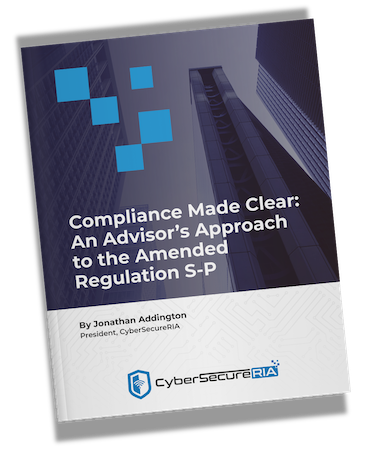
Under Regulation S-P, RIAs must implement policies and procedures that protect nonpublic personal information (NPI) of clients. We help you translate those requirements into practical, enforceable security layers: documented access restrictions, encrypted transmission channels, secure authentication, and end-to-end identity logging.
Our systems address that head-on, offering:
- Real-time access logs that track who touched what, when, and how
- Incident detection and escalation procedures mapped to the firm’s operating structure
- Written response plans, tested and reviewed, aligned with the proposed reporting windows
our RIA managed IT doesn’t just pass inspection. It becomes a living shield between your clients’ trust and today’s threats.
Integrating IAM Into Your Firm’s Existing Tech Stack
No firm wants to “rip and replace” tools that already work. We won’t ask you to.
Our team integrates IAM infrastructure directly into your current ecosystem—whether you’re running Redtail, Microsoft 365, SmartRIA, or a mix of cloud storage providers. We do this for RIAs day in and day out..
For integration, we provide*:
- SSO (Single Sign-On) flows across your key platforms
- IAM layer mapping to current logins, folders, and permissions
- Behavior-based access logging without user interference
IAM should enhance your stack, not disrupt it. And when we deploy the system, your team will continue working as they always have—only safer.
Reducing Insider Threats Through Smarter Access Controls
Some security events we’ve seen didn’t come from foreign actors or brute force attacks. They came from users inside the firm.
Untrained assistants clicking bad links. Trusted partners with access they no longer use. Files exposed from internal email forwarding where controls weren’t set.
We reduce insider risk by introducing:
- Session-based monitoring that spots abnormal usage patterns
- Privilege segmentation—so no one user can move laterally across systems
- Time-constrained permissions—access that expires unless renewed through protocol
None of these slow your people down. But they do close the cracks through which mistakes (or malice) become breaches.
Your IAM Strategy Should Start Here
IAM isn’t a software plugin or one-off checklist. It’s a protective framework. One that, when done right, provides operational clarity, consistency, and compliance—instead of risk-by-default.
You don’t need to guess whether your access controls are enough—or explain them during an audit.
You just need the right partner to own this work with you.
*This is dependent on the systems supporting it, not all all systems support SSO solutions you will choose to use.